
The Transformational Edge: An Inside-Out Approach to Becoming an ICF-Credentialed Coach
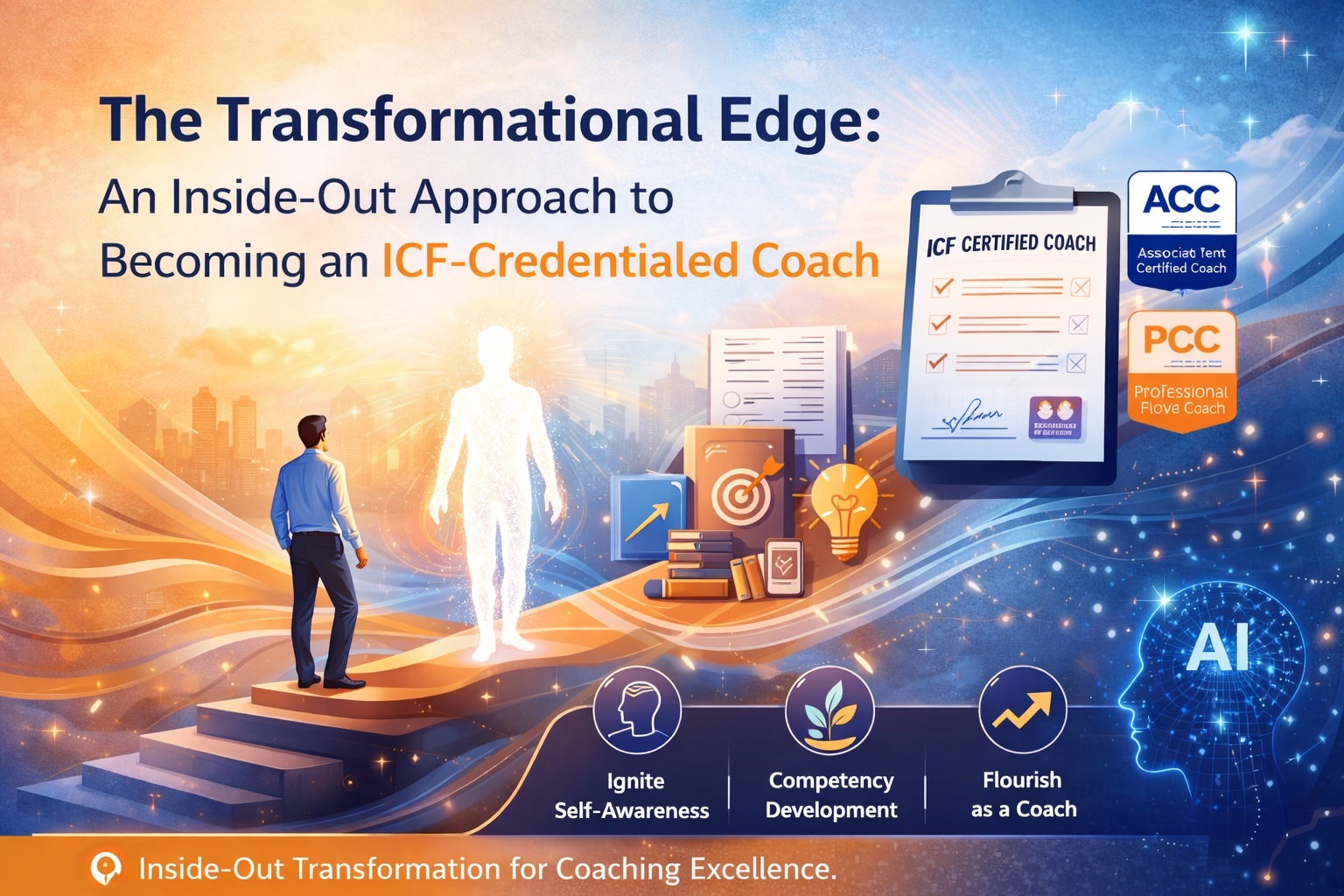
For many coaches, the journey toward an ICF credential begins with a clear roadmap—mastering competencies, completing mentor coaching hours, and preparing for performance evaluation. These milestones provide structure and direction, and they are undeniably important.
And yet, they are only one part of the journey.
The real transformational edge lies in an inside-out approach.
An inside-out approach invites a fundamental shift—from focusing solely on what you do as a coach to becoming deeply aware of who you are while coaching. It moves the lens inward, toward presence, emotional intelligence, and self-awareness—the invisible dimensions that shape every coaching conversation.
When coaches operate from the outside in, the emphasis is often on technique: asking powerful questions, following models, and demonstrating competencies. While these are essential, they can sometimes lead to coaching that feels effortful or performative.
In contrast, an inside-out approach creates alignment rather than effort.
You begin to embody the competencies of the International Coaching Federation, rather than trying to apply them. Listening deepens. Questions emerge more naturally. The conversation flows with greater ease and authenticity.
- You are no longer “trying to coach well.”
- You are simply being the coach.
- This shift is subtle, yet profound.
It allows you to listen beyond words—to what is not being said, to emotional undercurrents, to shifts in energy and meaning. Silence becomes a powerful ally rather than an uncomfortable gap. You begin to trust the client’s inner wisdom, resisting the urge to guide, fix, or accelerate outcomes.
At the heart of this approach is self-awareness.
An inside-out journey helps you recognize your internal patterns—your assumptions, your need for control, your attachment to outcomes. As these patterns become visible, they lose their unconscious grip on your coaching.
What emerges instead is a more spacious, client-centered presence.
-
You respond rather than react.
- You allow rather than direct.
- You partner rather than lead.
From a credentialing perspective, this creates a powerful advantage.
When your coaching is grounded in inner alignment, your performance is no longer about demonstrating competence—it becomes a natural expression of it. Your recorded sessions reflect authenticity, depth, and clarity. Your confidence is not dependent on getting it “right,” but on trusting your ability to stay present and responsive.
This is what assessors notice.
- Not perfection, but presence.
- Not technique alone, but attunement.
- Not structure, but partnership.
The inside-out approach also supports a deeper evolution—one that goes beyond credentialing.
At some point, every coach moves from learning tools to integrating them, and eventually, to transcending them. This is the journey from doing coaching to being a coach.
It is here that mastery begins to take shape.
You are no longer reliant on frameworks, yet fully aligned with them. You are no longer focused on outcomes, yet consistently enabling them. You are no longer managing the conversation, yet facilitating profound transformation within it.
The transformational edge, therefore, is not found in doing more.
It is found in going deeper.
Becoming an ICF-credentialed coach is not just about meeting global standards. It is an invitation to evolve—internally, emotionally, and even spiritually and when that inner shift happens, the credential becomes more than a certification. It becomes a reflection of who you have become as a coach.



.jpeg)



Comments List